sutra: Sanskrit for “thread”
Follow-through for cancer care,on top of what a hospital already has.
Doctors already decide the plan, and hospitals already hold the records. SUTRA connects the steps in between, from booking and reminders to reports, follow-up and visibility, without replacing the systems a hospital’s teams use today.
 Built for Indian hospitals
 Works with paper & legacy systems
 ABHA-ready
One thread runs through a patient’s care, from the plan a doctor signs to the day the treatment happens. Every figure on this site is sourced.
Cancer care is continuous.The record of it isn’t.
ABHA, the national health ID, gives India the foundation for a lifelong health record. Inside most hospitals, though, a cancer patient still moves from the outpatient department, the OPD, to the lab, the pharmacy and back, through paper, phone calls and systems that do not talk to each other.
Same patient.
Different systems.
Too many gaps.
It starts with a person.
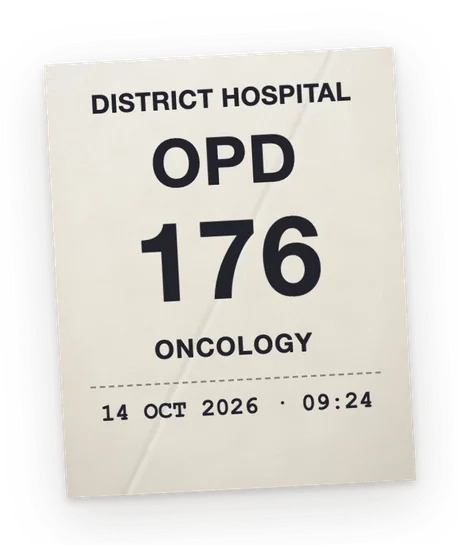
A visit is logged, maybe.
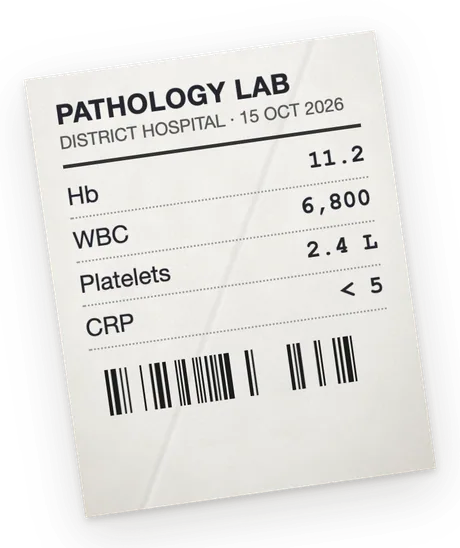
Reports live in another system.
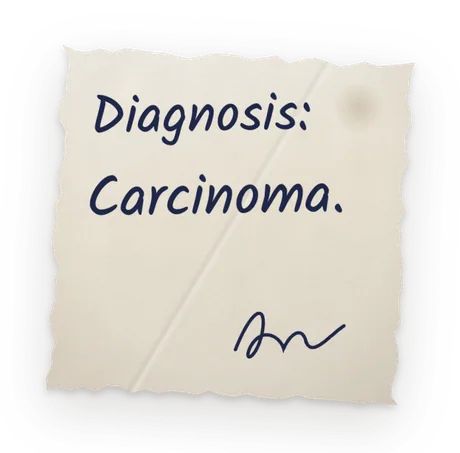
Critical information, often on paper.

“Sir, report WhatsApp kar dijiye?”
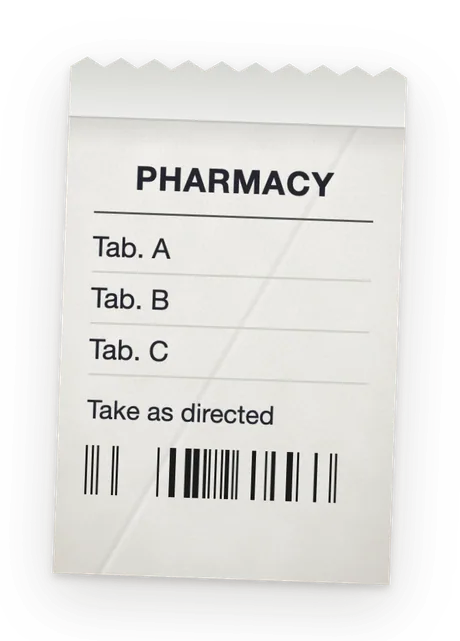
Yet another system.
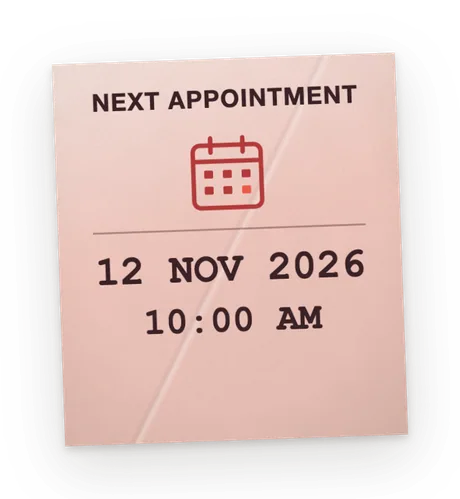
Often done by hand.
Will they come back?
Planned steps slip between desks.Nobody sees it until it is late.
This is one ordinary week in the oncology unit of a district hospital. Every step was planned correctly, and several of them still did not happen.
- Monday · the OPD
The doctor writes “CBC before cycle 4” on each patient’s slip. A CBC is a routine blood count, but the slip does not say where to have it done or by when.
- Wednesday · the lab
Three caregivers bring patients to the lab in the afternoon. The lab stopped taking samples at 11, so they are sent home and told to come back.
- Friday · day care
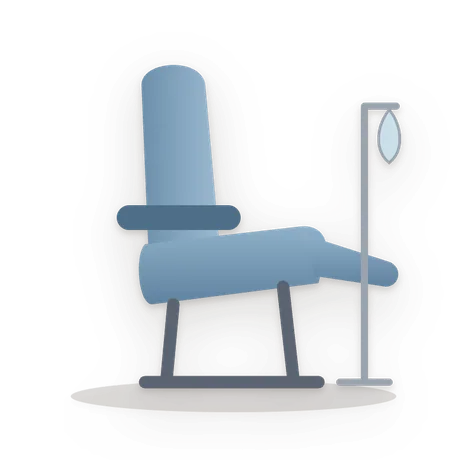
Two chemotherapy chairs stay empty at 09:00 because the blood reports have not arrived. One of them was Meena’s, so her cycle 4 is pushed back by a week.
Every instruction in that week was right. None of them was turned into a booked slot with a report due in time.
 CBC before
cycle 4

1 in 7

33.5%
14–30%
- Cancer Reports 2020
- Eur J Obstet Gynecol 2024
- BIACH&RI 2025
Every desk has its own system.None of them holds the plan.
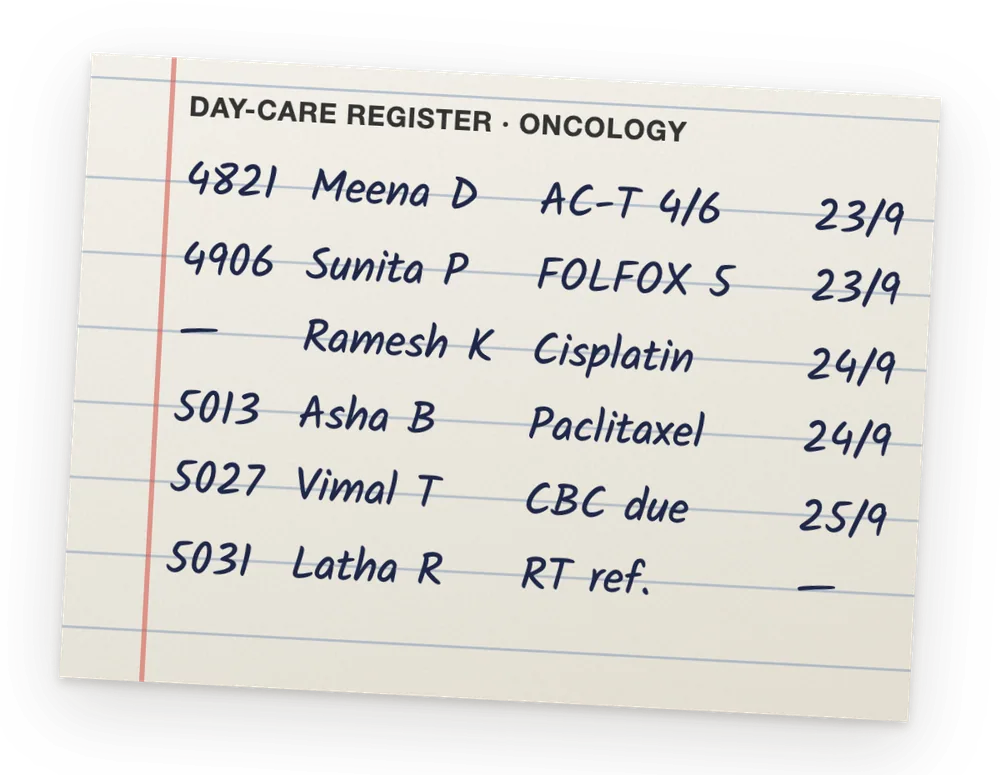
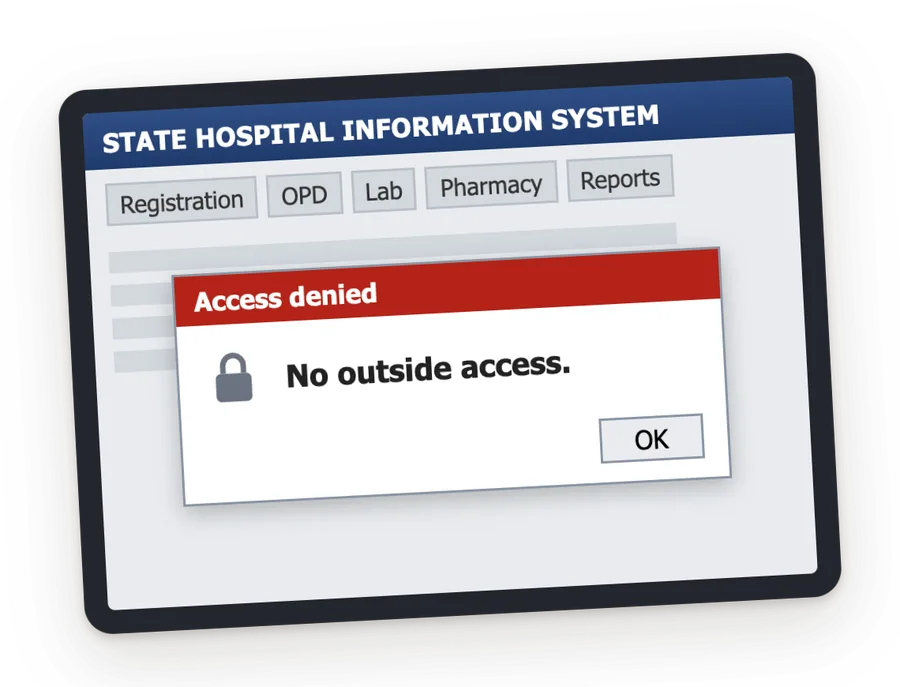
The plan lives on a
slip of paper.
- Most systems are closed, or there is none.
- The large state hospital systems do not let outside software connect to them. Many district hospitals have no system at all and still run on paper registers and a spreadsheet.
- ABHA exists, but most care never touches it.
- Two in three Indians now have an ABHA. But only half of registered facilities run software linked to ABDM, the national network that carries those records.
- Mandates are arriving faster than software.
- Medical colleges and hospitals in PM-JAY, the national health insurance scheme, are being told to connect to ABDM. That will only happen when the tools staff use every day create and link ABHAs as part of their normal work.
93 crore+
~450
- PIB, 6 Jul 2026
- NMC notices, Jul 2026
SUTRA sits on top of the hospital’s systemsand follows the plan through.
SUTRA reads the register or the EHR, the electronic health record, and books through the hospital’s scheduler. An engineer from our team sets it up on site in thirty days.
- Familieson WhatsApp, in their language
- The doctorhistory, dictation, one signed plan
- The hospital adminthe unit’s own numbers
- EHR or register
- Scheduler
- Lab
- Pharmacy
- ABDM
The hospital’s own systems stay where they are.
Who keeps what
- The EHR or register keeps the patient’s identity and the clinical record.
- The hospital’s scheduler keeps the free slots and the confirmed bookings.
- ABDM keeps consent and the national record when the patient has an ABHA.
- SUTRA keeps the signed plan, the messages and a log of every step.
If a system is missing, open source fills the gap
- No EHR? The hospital can use Bahmni, an open-source hospital system built in India.
- No scheduler? Bahmni’s appointments module can take bookings.
- No lab or pharmacy system? OpenELIS and Odoo, open-source lab and pharmacy systems, come with Bahmni.
- Only paper? Pages are photographed, read by OCR (optical character recognition) and checked by a clerk.
Nothing leaves the hospital without a doctor’s signature and the patient’s consent.
The doctor sees the whole history,and signs one plan for six months.
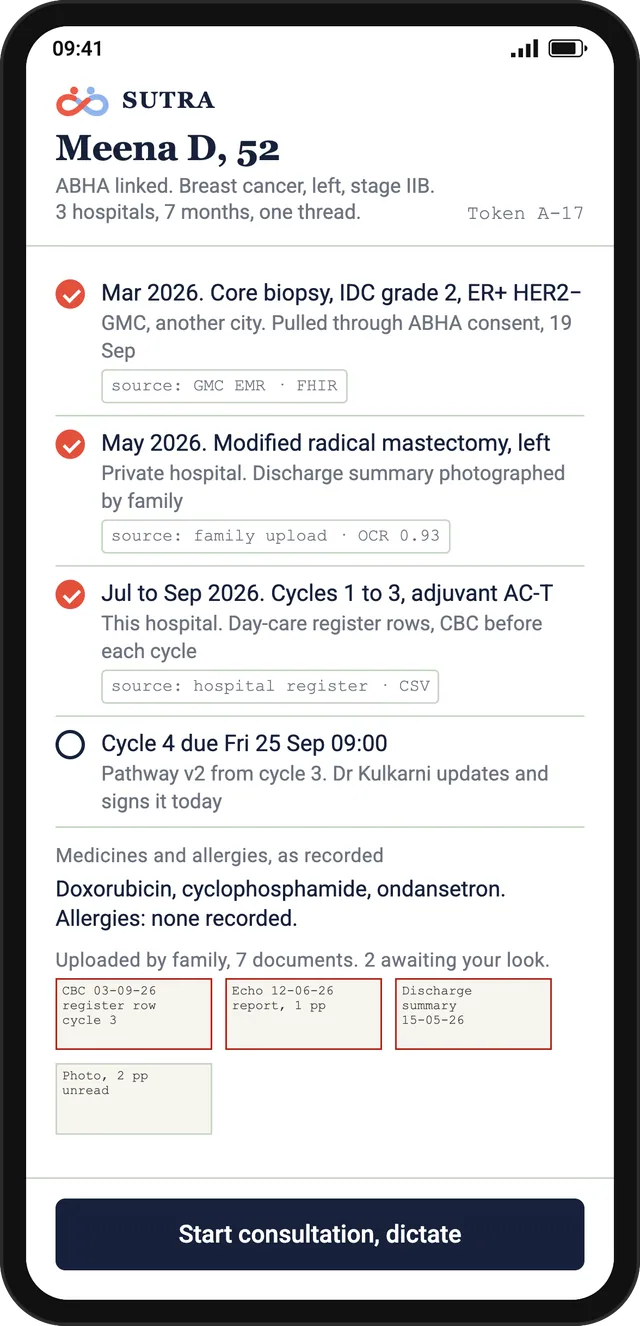
In the consultation room, the unit’s oncologist, Dr Kulkarni, sees the history from every hospital on one screen, with a source on every line.
- One screen, three hospitals
The biopsy report arrives from another city through ABHA, the discharge summary from a photo the family sent, and the earlier cycles from this unit’s own register.
- Dictate, check, sign
She dictates or types the prescription, then checks every date and dose herself and signs it. The signed text is the medical record, not the audio.
- A six-month pathway
She lays out surgery, six cycles with a blood test before each, radiotherapy and follow-up, and decides when each test is due. No model can change these timings.
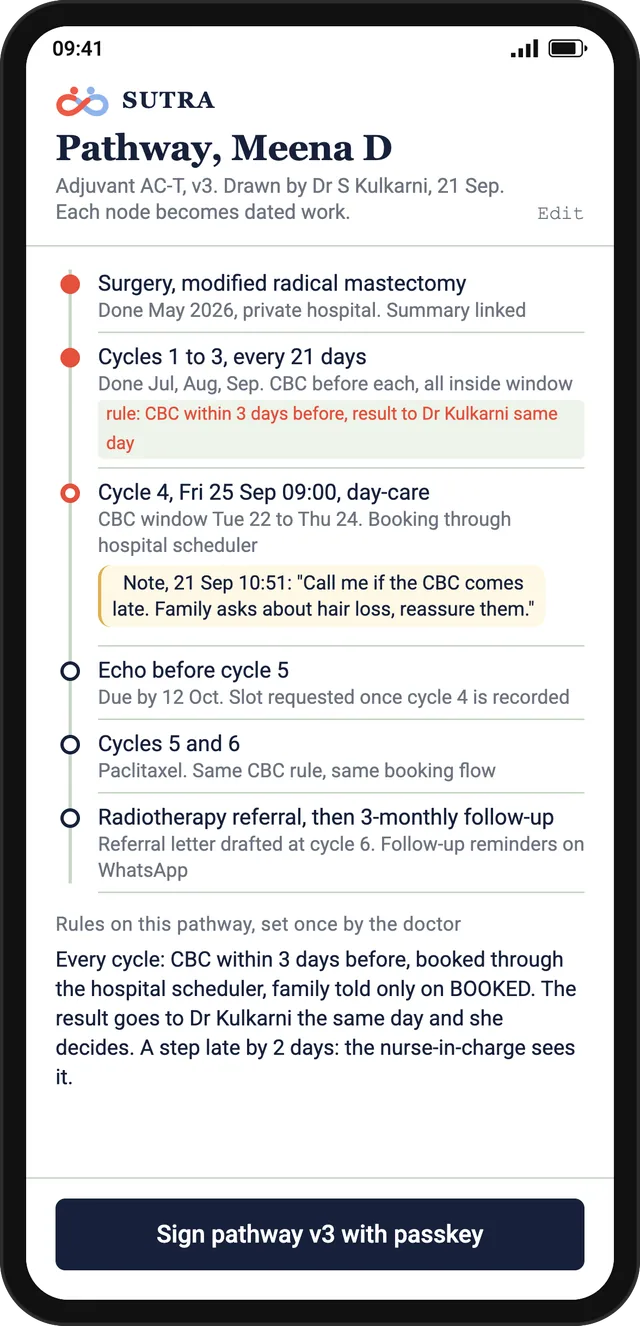
She signs,
not the audio.
Six months, one signed pathwayThe doctor sets every timing
- Surgery
- Blood test
- Cycle 1
- Blood test
- Cycle 2
- Blood test
- Cycle 3
- Blood test
- Cycle 4
- Blood test
- Cycle 5
- Blood test
- Cycle 6
- Radiotherapy
- Follow-up
One signed pathway replaces a fresh slip at every visit. The lab, the day-care nurses, the pharmacy and the family all see the same plan.

6.9 min
14–30%
- IJCMPH 2023
- BIACH&RI 2025
SUTRA books every step,and a person answers every question.
The caregiver uses the WhatsApp number the family already has, so there is no app to install. SUTRA turns each signed step into a booked slot and brings the report back to the doctor.
- Asked, then booked
SUTRA offers the caregiver free slots from the hospital’s scheduler and confirms a time only after the scheduler has booked it. The OPD desk sees who is coming, with their papers attached.
- Sent, then filed
The caregiver sends a photo of the report. A records clerk checks that it belongs to the right patient, and it is filed for the doctor to read before the next cycle.
- Questions reach a person
A question about the plan is answered with the plan’s exact words. Questions about symptoms or medicines go to a nurse, and a message containing a word the doctors marked as urgent alerts the nurse at once.
- Namaste. Dr Kulkarni’s signed plan says Meena’s blood test, a CBC, is due before cycle 4. Which time suits you?Tue 22 Sep, 10:30Wed 23 Sep, 08:30Thu 24 Sep, 08:30
- Thursday, 08:30
- Asking the hospital’s scheduler for that slot. You will hear from us only once it is booked.
- Booked. Blood test (CBC), Thursday 24 Sep, 08:30. Lab counter 3, ground floor, OPD building. Reference LAB-91843.
- Report photo
- Received. A records clerk will check that it is Meena’s and file it for Dr Kulkarni before cycle 4.
- When is her next test due?
- From the signed plan, word for word: “CBC within 3 days before each cycle, booked through the hospital scheduler.”
- She has had loose motions since yesterday. Is that normal?
- I have passed this to the nurse on duty. A nurse will call you back on this number.
Sample data · the real conversation runs in the family’s language
Booked means booked.
How a family question is routed
“She has a fever tonight.”A model tags each message. The clinicians’ own rules decide where it goes.
- The plan’s exact words
If the question is about a planned step, SUTRA sends the matching line of the signed plan, word for word.
- A nurse, or the doctor
Questions about symptoms or medicines go to the nurse’s queue, and the nurse calls back. Anything only the doctor can answer waits on her list.
- Straight to a person
If a message contains a word the doctors have listed as urgent, SUTRA sends the casualty number and 112 and rings the nurse at once.
Nothing in SUTRA judges how ill anyone is. The design follows Noora Health, a nonprofit WhatsApp helpline for families in Indian public hospitals, where a model only reads each message and clinician-written rules decide who sees it.
231
152,421
40% → 18%
- arxiv.org/abs/2609.09356, Sep 2026
- arxiv.org/abs/2609.09356, Sep 2026
- Indian J Palliat Care 2026
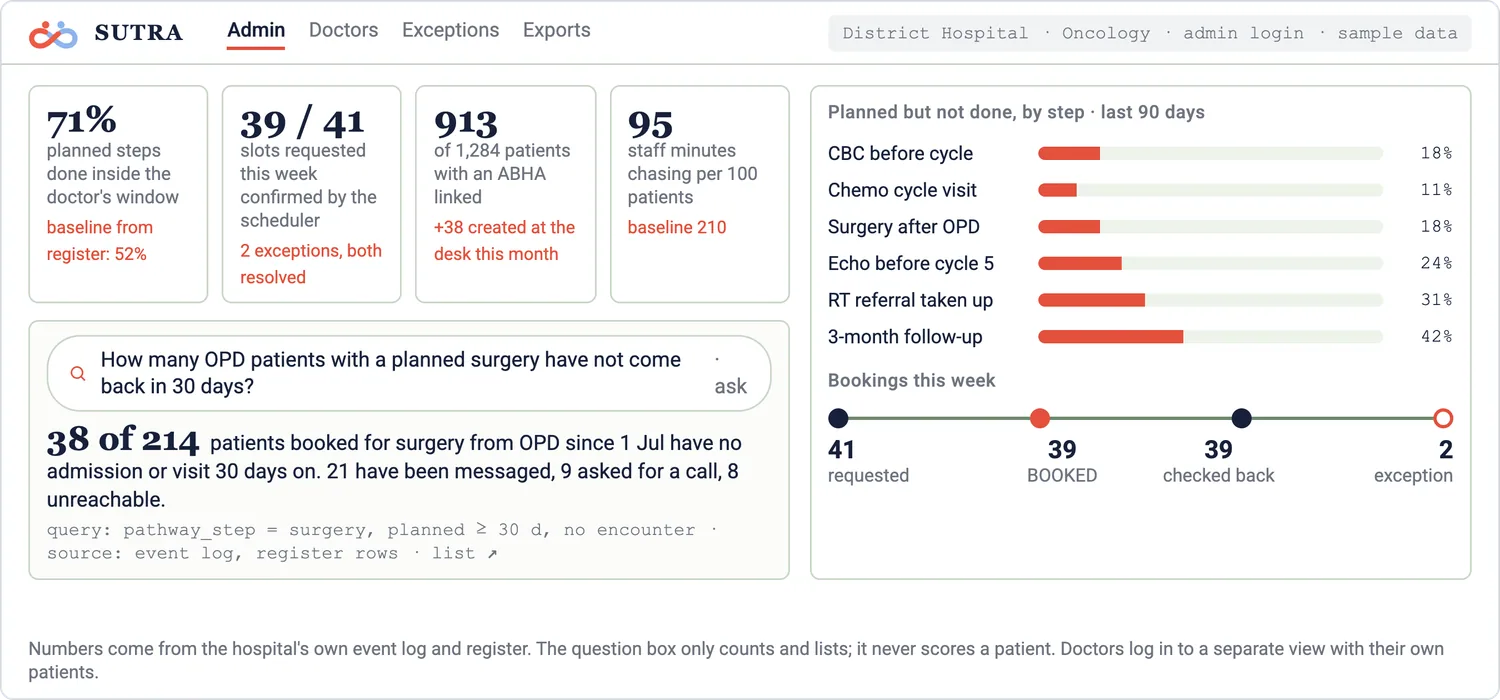
The hospital sees its own follow-through
Every step in every plan is recorded as a dated event with its source. The hospital admin can also ask questions in plain words, and every answer is counted from that log.
- Which patients were told to come back for surgery and have not returned after thirty days?
- Which bookings never confirmed, and where did they fail?
- Which OPD patients still have no ABHA linked to their record?
Counts, never scores.
A hospital joins in one sitting,from the register it already keeps.
Setup takes one sitting at the superintendent’s desk, and going live takes thirty days. Our forward-deployed engineer, a member of our team who works inside the hospital, is there from the first step to the last.
- 1Sign off
The superintendent names an admin, who can see every number, and an approver who signs off staff. An engineer from our team sits with them on site.
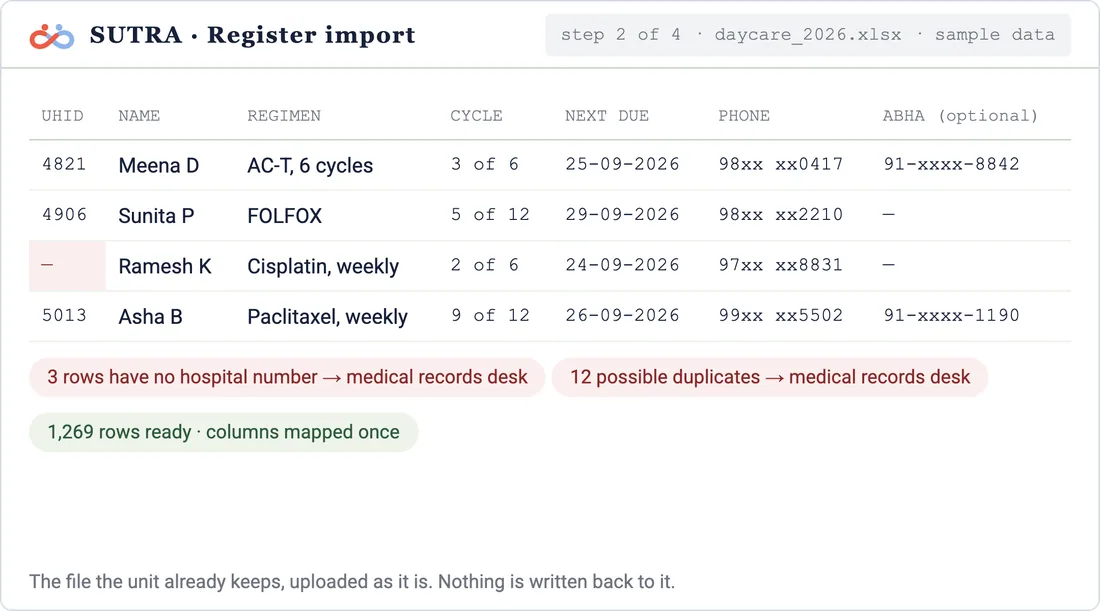
- 2Register as a file
The unit uploads the Excel register it already keeps. Rows without a hospital number go back to the records desk instead of being loaded.
- 3Register on paper
If the register is on paper, the pages are photographed and read by OCR, optical character recognition. A clerk checks every cell the software is unsure of.
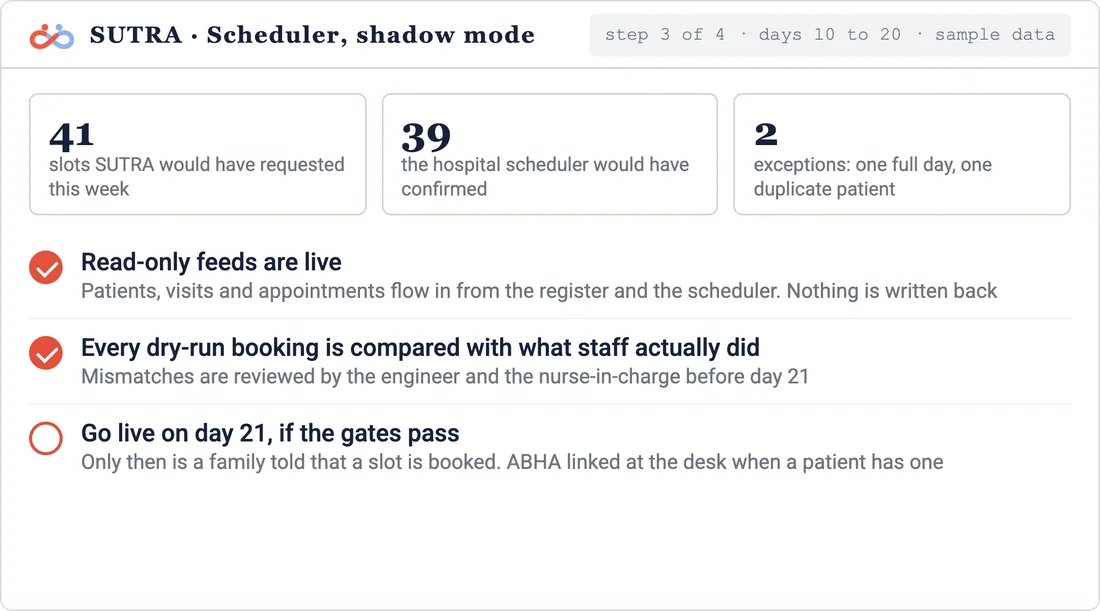
- 4Ten-day trial
For ten days SUTRA only works out what it would have booked, and the engineer compares that with what staff did. No family hears about a booking yet.
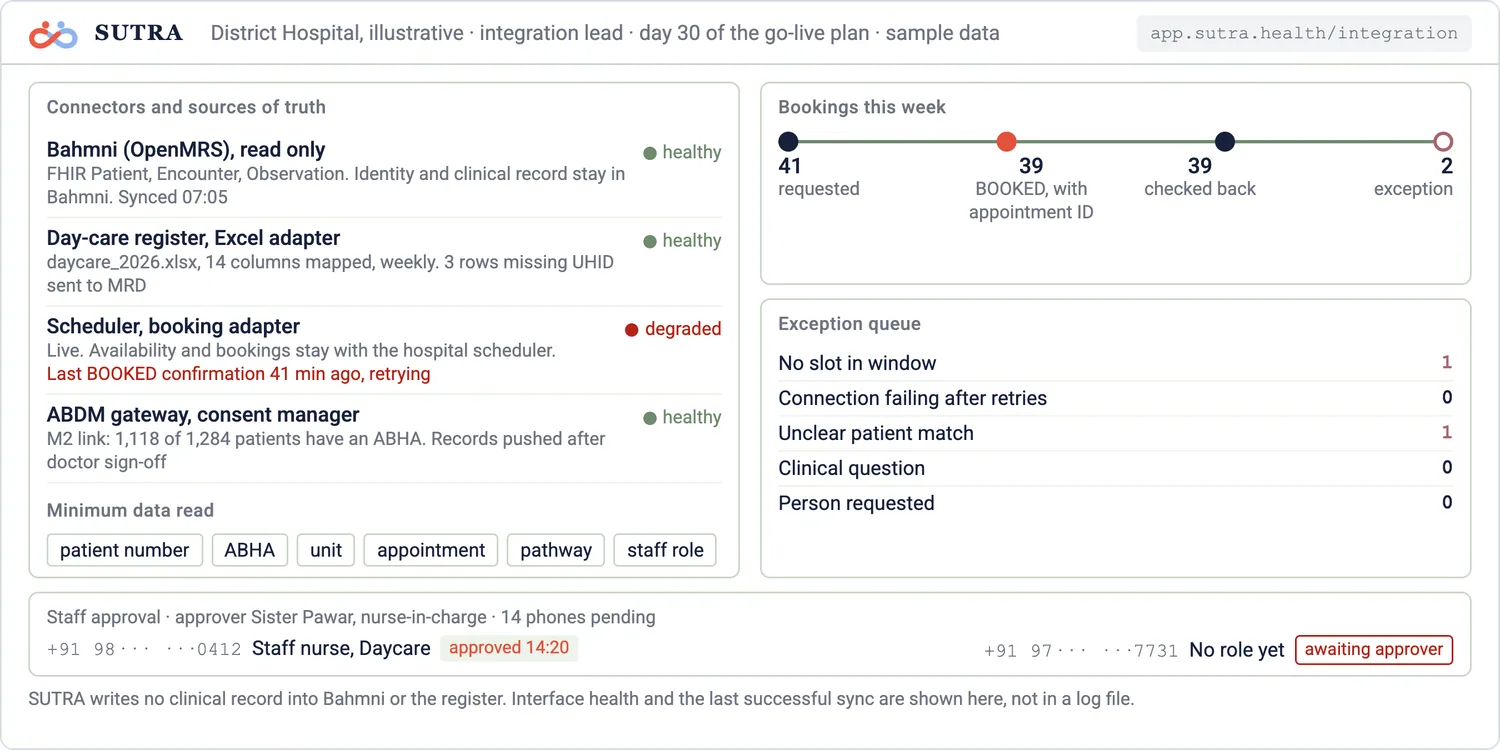
- ✓Live
Families are told about bookings after the trial. Going live takes thirty days in all, and our engineer is there from the first step to the last.
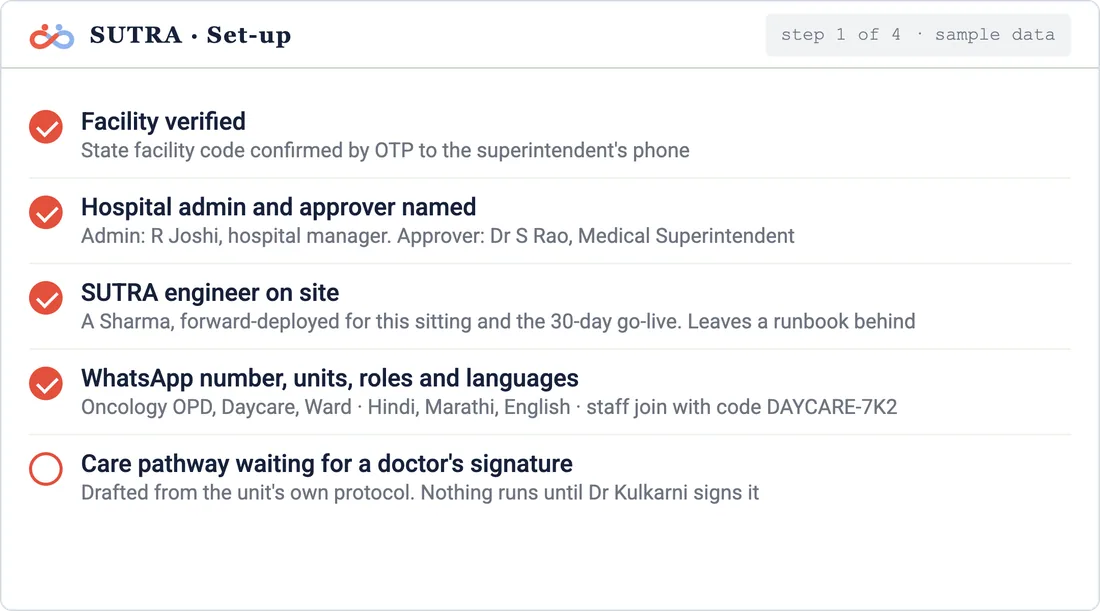
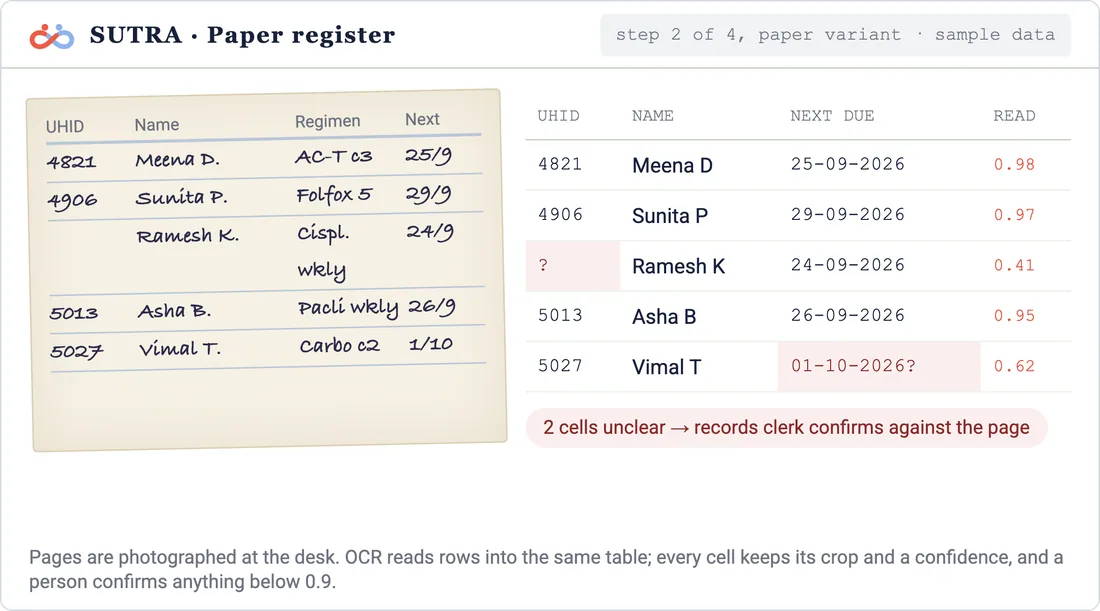
Paper registers count too.
Onboarding screens · sample data.
82%
- MIRAGE 2024
AI reads, tags and transcribes.People decide everything clinical.
Models transcribe speech, read documents and sort messages. People confirm anything clinical, and fixed rules set every deadline and booking. SUTRA never diagnoses, never scores a patient’s risk and never interprets a medical value.
Turns the doctor’s Hindi or English speech into a draft prescription.
The doctor checks every line and signs it. She can always type instead.
Reads reports and register pages into structured fields.
Each field shows its source and confidence. It never judges whether a value is normal.
Tags what a family message is about.
The tag only decides who reads it first. The model never replies to a family.
Finds the matching line in the signed plan, or counts events for the admin.
It only retrieves and counts. It never scores a patient or gives advice.
Small models run on the hospital’s premises, and every model version, confidence and correction is logged. Public benchmarks are not clinical validation, so every hospital measures its own error rates.
People decide what is clinical.
40%+
- Elsevier survey 2025
Free and open source,so anyone can connect a hospital.
SUTRA is open source under the AGPL licence, so a hospital can run it on its own server without paying for it, and any changes to it stay open too.
- Skills
Each connection is written up as a step-by-step recipe that a hospital’s IT staff, a local vendor or a coding agent can follow.
- MCP tools
The adapters are also exposed through MCP, the Model Context Protocol, the open standard that AI assistants use to call tools, so other software can inspect and map a hospital’s export.
- What the tools can never do
These tools can read, map and test. They cannot write a clinical record, sign a pathway or send a family a message.
Connect a hospital · tools
inspect_exportread the hospital’s exportpropose_mappingdraft the column mapdry_run_importtest it, write nothingshadow_bookwork out a booking, send nothing
read · map · test sign · send · write
Anyone can connect a hospital.
Follow the work on GitHub: github.com/sutrahealth

500+ sites
- bahmni.org 2026
Every hospital starts with one unit,measured by one number.
For ninety days we track one number: the share of planned next steps that were taken inside the window the doctor set.
- Weeks 1–2 · Baseline
We count missed steps from the existing register.
- Weeks 3–4 · Connect
We map the data and test bookings without telling families yet.
- Weeks 5–8 · Run
Booking, pathways and report filing run live.
- Weeks 9–12 · Compare
We measure again the same way and review every exception.
Each partnership begins with one oncology OPD, one pathway signed by the unit’s doctors, and a named clinical lead at the hospital. The first ninety days cover the core path: register import, WhatsApp booking, the signed plan and filed reports.
23%
- TN HMIS 3.0, 2025
Bring SUTRA to your unit
To start, we need read access to the OPD and day-care registers, the hospital’s export and appointment interface, and an ABDM sandbox account, a test account on the national network. SUTRA and its connectors are open source and free for any hospital to run, and we report each unit’s numbers whether or not they improve.
hello@sutrahealth.orgIf you run an oncology unit, or you want to help connect one, write to us.